
Product
·
Directory Service
Secure IT Assets By Streamlining Identities
As a core enterprise IT infrastructure component, it delivers device management, terminal authentication and security policy distribution for mainstream OS terminals, boosts IT management efficiency and network security, and underpins modern IT architecture construction.

Core Capabilities
01.
Identity Authentication
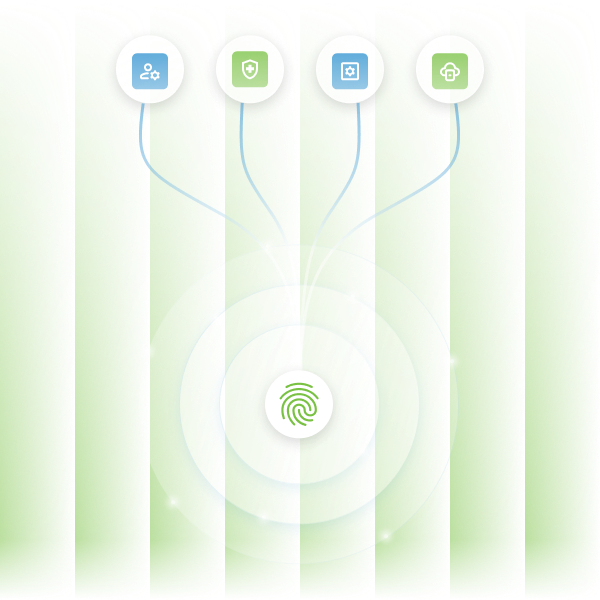
Enable centralized authentication and SSO based on LDAP and Kerberos protocols; let users access all authorized domain resources securely with a single set of credentials.
02.
Resource Management
Organize and maintain users, computers and other objects hierarchically via domain and forest structures; ensure unified management and control of network assets.
03.
Policy Management
Define and distribute security and configuration rules centrally through Group Policy; ensure consistent compliance of all network computers and users with unified standards.

04.
Permission Management
Control resource access via fine-grained authorization; support permission delegation and the principle of least privilege.

Technical Advantages
High Availability & Multi-Active Disaster Recovery
Adopt multi-master replication model; all domain controllers process requests with real-time data synchronization. Combine site and global catalog design; ensure continuous service availability and optimize cross-network access efficiency.
Efficient Authentication Mechanism
Replace traditional password transmission with Kerberos ticket protocol; achieve fast and secure identity authentication and SSO. Support mutual authentication; resist man-in-the-middle attacks effectively.
Domestic Platform Native Security
Integrate national cryptographic algorithms and domestically developed platform security modules; build a security protection system meeting independent and controllable requirements, covering identity authentication, data transmission and policy execution.
Open Protocol Integration & Access
Fully support standard protocols including LDAP and Kerberos; provide RESTful API interfaces and support JSON/XML data formats to enable rapid integration.
Value Matrix
Safty
Adapt to the domestically developed ecosystem deeply to meet domestic compliance requirements; implement centralized policy control and auditing, ensure identity security and full operation traceability, and prevent internal and external risks effectively.
Efficiency
Equip with a modern web-based unified management console; enable cross-platform batch operations and automated policy deployment, simplify daily O&M and multiply IT management efficiency.
Flexibility
Act as an open identity hub; integrate existing AD, protocol-based applications and enterprise IAM seamlessly, protect legacy assets and provide unified standards for future system access.
Empowerment
Ensure high availability and consistency of core identity services in hybrid IT environments; provide reliable and flexible basic support for the rapid launch and stable operation of business systems.
Use Cases
框魁慈乙邻否汹禄晨侯叶剖滩集嫂仿舒。
01.
Seamless Migration from AD
Provide highly compatible data interfaces and protocols; support seamless migration of core data (users, group policies, etc.) from AD. Enable enterprises to complete AD replacement gradually and smoothly while maintaining business continuity, and reduce binding risks.
02.
Domestic Environment Adaptation
Deliver complete identity authentication, permission management and Group Policy capabilities for pure domestically developed terminal environments (HarmonyOS, Kylin, UOS). Adapt to commonly used domestic middleware; meet unified management needs of domestic operating systems and applications.
03.
Gradual Transition in Hybrid Environments
Act as the core of unified management and control in the coexistence stage of Windows and domestically developed systems; connect heterogeneous systems, realize one-account access and unified policy distribution, and support phased and progressive domestic replacement for enterprises.
04.
Full-Coverage Single Sign-On
Provide unified authentication capabilities in hybrid domestically developed and Windows environments; enable one-click login for users to access all authorized applications and systems on different terminals, eliminate multiple password troubles and boost work efficiency and experience significantly.
Success Stories

Complementary Products


Bamboocloud IAM Products
Resources
When AI Has an "ID Card": How Enterprises Manage a Myriad of Non-Human Employees?
Imagine the future, in addition to hundreds or thousands of human employees, there may also be tens of thousands of active “digital employees”